
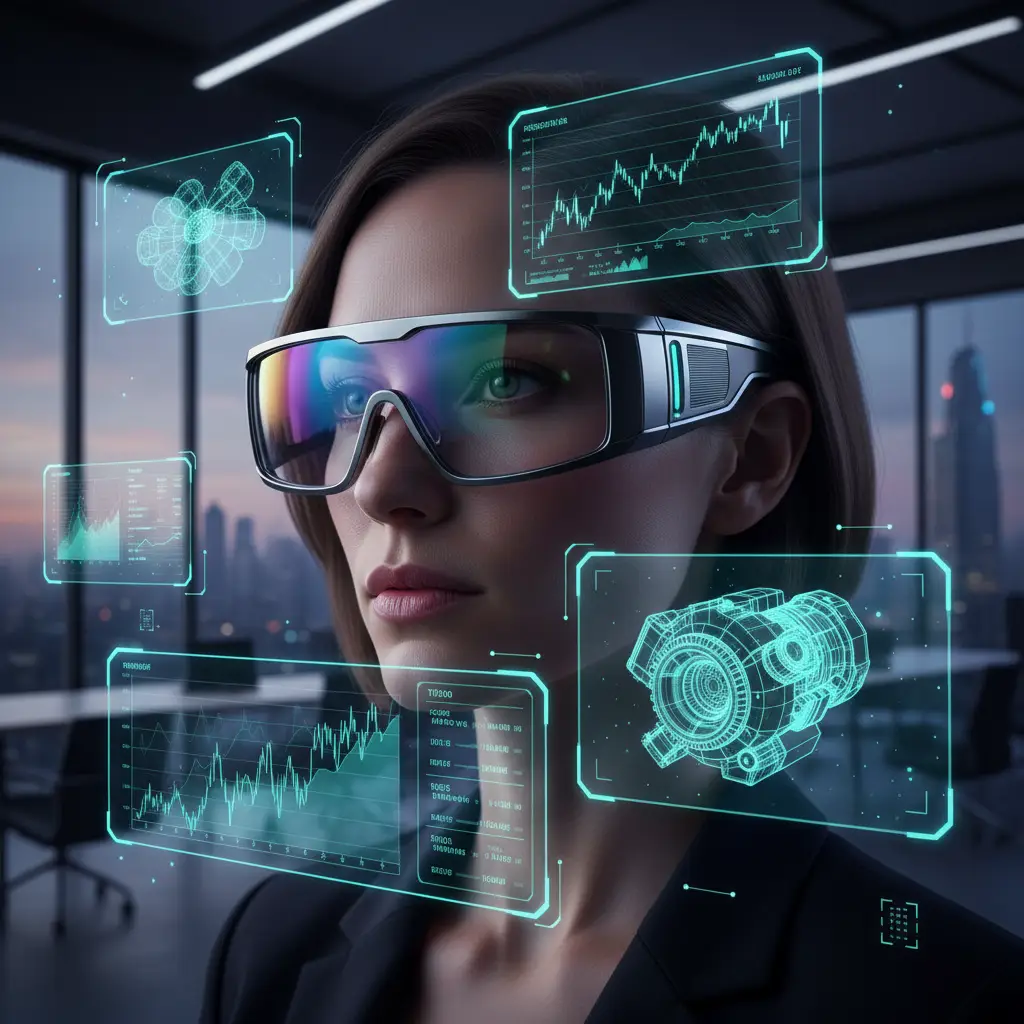
The way we interact with the digital world is on the verge of another leap forward. AI-powered smart glasses — once a quirky novelty — are rapidly becoming one of the most consequential technologies of 2026. From enterprise workflows to everyday consumer experiences, these wearable AI computers are blurring the line between the physical and digital in ways that feel effortless, intuitive, and genuinely transformative.
At Creote Studio, we’ve always been at the forefront of immersive and interactive technology. This year, we’re watching the smart glasses revolution unfold in real time — and the implications for businesses and creators are enormous.
From Gadget to Platform: What’s Changed
Early smart glasses struggled with bulk, battery life, and purpose. The glasses of 2026 are a different species entirely. Driven by breakthroughs in micro-LED optics, edge AI chips, and multimodal machine learning, today’s devices are lightweight, stylish, and genuinely useful.
- Real-time contextual awareness: AI models running on-device can identify objects, read text, recognise faces (with permission), and surface relevant information — all within your field of view.
- Proactive agentic assistance: Rather than waiting to be asked, smart glasses can anticipate needs — flagging an upcoming meeting, translating a sign in a foreign language, or highlighting a product defect on a factory floor.
- Natural interaction: Voice commands, gesture control, and even eye-tracking replace the need for traditional menus or screens, making the experience feel more human than any prior computing interface.
Meta’s Ray-Ban smart glasses have already demonstrated that consumers will embrace wearable AI when it’s embedded in familiar, fashionable form factors. Google’s 2026 collaboration with Xreal on Project Aura and Warby Parker’s entry into AI eyewear signal that the mainstream tipping point is here.
Enterprise Applications: Where the Real Value Lives
While consumer buzz is significant, the enterprise opportunity is where smart glasses are already delivering measurable ROI. Industries across the spectrum are finding practical, high-value use cases:
- Manufacturing and field service: Technicians receive step-by-step AR overlays during complex assembly or maintenance tasks — hands-free, eyes-on-task, error rates drop dramatically.
- Healthcare: Surgeons and nurses access patient data, imaging, and procedural guidance without ever touching a screen, reducing contamination risks and improving focus.
- Logistics and warehousing: Pick-and-pack operations guided by AR overlays reduce training time and improve throughput. Real-time inventory data appears contextually as workers move through facilities.
- Retail and sales: Customer-facing teams can pull product specs, stock levels, and personalised recommendations into view during live conversations — no more tablet fumbling.
- Training and onboarding: New staff learn by doing, with AI guidance overlaid on real equipment in real environments, compressing weeks of classroom training into days of hands-on experience.
The Role of AI: Making It All Click
Hardware improvements matter, but AI is the real engine behind the smart glasses revolution. The integration of large multimodal models — capable of understanding vision, language, and context simultaneously — is what makes these devices genuinely intelligent rather than simply connected.
Key AI capabilities that define 2026’s smart glasses:
- Real-time translation and subtitles rendered directly in the wearer’s view, breaking down language barriers instantly.
- Object and scene recognition that understands not just what something is, but what it means in context — a cracked weld on a pipeline, a mispriced product on a shelf, a new face at a networking event.
- Personalised assistance that learns from the wearer’s patterns, preferences, and role — becoming more useful over time rather than static.
- Generative overlays that can create 3D visualisations, annotations, and guidance content on the fly, tailored to the moment.
This is no longer about heads-up displays. It’s about an AI layer that sits at the intersection of the physical and digital — always present, always contextual, never intrusive.
Design and Experience: The Unsolved Challenges
For all the momentum, smart glasses still face real challenges that the industry is actively working to solve:
- Battery life remains a constraint, particularly for all-day enterprise use. Advances in low-power AI chips and energy-dense battery materials are narrowing this gap.
- Privacy and social acceptance are critical. The inclusion of cameras and always-on microphones raises legitimate concerns that manufacturers are addressing through clear visual indicators, consent frameworks, and on-device processing.
- Field of view limitations in optical waveguide displays mean that AR overlays currently cover only a portion of the user’s vision. Micro-LED and holographic waveguide advances are expected to expand this significantly by late 2026.
- Content and software ecosystems are still maturing. The killer apps for smart glasses are only beginning to emerge — which is both a challenge and a significant opportunity for developers and studios like Creote.
What This Means for Interactive Experiences
For brands, event organisers, and businesses investing in interactive technology, smart glasses represent a new canvas. Imagine:
- Exhibition visitors wearing smart glasses that layer rich contextual information, animations, and stories onto physical artworks and installations.
- Retail environments where products come alive with AR content visible to any customer wearing smart eyewear.
- Live events enhanced with real-time stats, captions, and interactive elements visible only to attendees with glasses — personalised, layered experiences that don’t disrupt the physical space.
- Corporate events where speakers’ slides and notes appear in the presenter’s view, while audience members see curated supporting content in theirs.
The creative and commercial possibilities are vast. And as the hardware becomes more accessible — with analyst projections pointing to a $30 billion smart glasses market by 2030 — the window to build first-mover advantage is open right now.
Creote’s Perspective: Build for What’s Coming
At Creote Studio, we believe the most impactful interactive experiences will live at the convergence of AI, spatial computing, and wearable technology. Smart glasses aren’t a distant future scenario — they’re a present-day platform with real deployments, real ROI, and real creative potential.
The studios, brands, and enterprises that start exploring this medium today — designing content, experiences, and workflows with wearable AI in mind — will be the ones who lead when the technology reaches full mainstream adoption.
We’re already working with clients to explore what’s possible in this space, from enterprise AR solutions to branded interactive experiences designed for the next generation of wearable devices.
Ready to explore what AI smart glasses could mean for your organisation or brand? Get in touch with the Creote Studio team — we’d love to help you think through the possibilities and build something remarkable.